TDS (Liquid Cold-Resistant Rubber LR506)
Name: Liquid Cold-Resistant Rubber
Model: LR506
Origin: Daxun
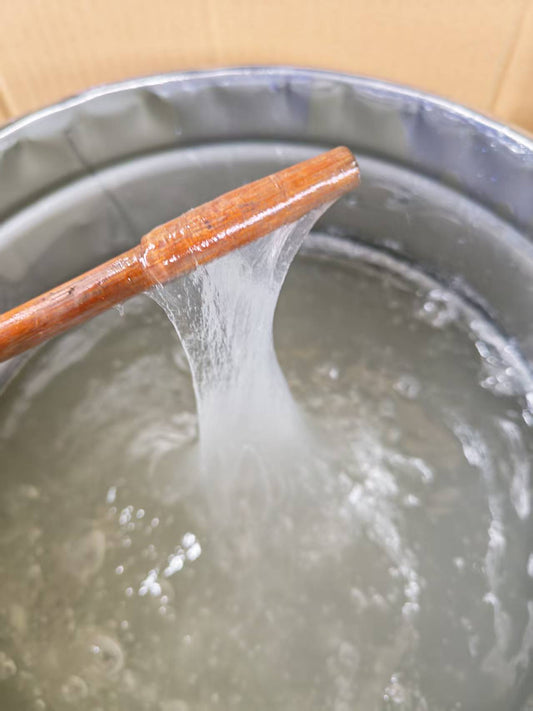
Appearance: Transparent, nearly colorless viscous liquid
Specific gravity: 1.06–1.08
Glass transition temperature: –40°C
Molecular weight: 90,000–110,000
Viscosity: 60,000–65,000 mPa·s
Functional groups: OH
Synthesis route: Not specified
Toxicity: Low toxicity
Environmental compliance standards: EU EN71-3:2019+A1:2021, EU 2002/61/EC (excluding specific azo compounds), EU ROHS 2.0, EU 2005/84/EC (no P requirement), EU REACH Article 247, US CPSIA, US ASTM 963-16, etc.
I.Features: LR506 is a liquid rubber free of phthalate plasticizers; it is non-toxic, transparent, water-resistant, oil-resistant, cold-resistant, plasticizing, has a pleasant texture and elasticity, with all properties surpassing those of powder or liquid nitrile rubber while being more cost-effective.
II.Main application :
1. As a cold-resistant agent for PVC: LR506 can withstand temperatures down to-40°C, making it a complete substitute for DOS as a cold-resistant plasticizer in PVC formulations. The recommended dosage is identical to that of DOS; combining 10–15 parts of LR506 with 10–15 parts of DOS yields significant cold resistance without precipitation, resulting in a product that exhibits both elasticity and excellent cold resistance—characteristics unattainable with DOS alone.
2. As a elastic modifier for PVC.
Building upon the original soft PVC formulation, adding 10–20 kg (equivalent to 2–4 bags) of liquid rubber per 100 kg of PVC requires correspondingly reduced amounts of DOP, DINP, or DOTP. The resulting product exhibits excellent elasticity with minimal cost increase. Its tactile properties and elasticity surpass those of powdered nitrile rubber; moreover, its effective dispersion serves as a plasticizer, enabling reduced usage of other plasticizers and lower production costs. In contrast, powdered nitrile rubber suffers from poor dispersion and thus cannot function as a plasticizer, necessitating higher amounts of other plasticizers and higher costs. 3. As a primary PVC plasticizer: Due to LR506's excellent compatibility with PVC, it can replace partial or all conventional primary plasticizers without precipitation issues even at high concentrations (up to 100 parts). During production of ultra-soft PVC products requiring 100–200 parts of plasticizer, plasticizer precipitation often occurs. Substituting 20–30% of plasticizer with LR506 effectively maintains flexibility while preventing precipitation—a preferred solution for ultra-soft PVC products that ensures outstanding elasticity and tactile performance. Consequently, LR506 is recognized as a premier polymer plasticizer.
In summary, LR506 exhibits three key properties: cold resistance, elasticity, and plasticizing capability.
III.Precautions for laboratory sample preparation:
1.The LR506 must not be added to existing base materials for plate molding, as the PVC in the base material has already saturated with other plasticizers and cannot absorb further 506 components. This would compromise the performance of the 506 material and cause adhesion to the rollers.
2.LR506 should not be directly added to PVC powder for mixing, as its excessively high viscosity makes it difficult for PVC to absorb. This will prevent LR506 from functioning properly and may cause it to stick to the rollers.
3.The correct procedure is as follows: first dilute 4 grams of the plasticizer at a ratio of 506 per gram, then add the diluted material along with other additives to PVC and mix thoroughly. Only after LR506 is fully absorbed by the PVC powder can its functionality be achieved.
IV.Specific usage instructions for production:
1.For producing cold-resistant products using the general suspension PVC calendering method at temperatures above-40°C, the LR506 in box packaging is the preferred choice. Each 20 kg box contains four bags, each weighing 5 kg. The bags are wrapped in two layers of high-VA EVA film. During feeding, cut the packaging tape with scissors first, then add both the EVA bags and the surrounding plastic material (which has been melted to 70°C) into a high-speed mixer and mix thoroughly; do not use a internal mixer. It can be used exactly as a conventional plasticizer. Based on customer feedback over recent years, high-VA EVA exhibits excellent compatibility with PVC, and the addition of this small amount of EVA film poses no compatibility issues during PVC processing.
Remember: the amount of LR506 added to the mixer directly corresponds to the reduction in plasticizer required in the formula, thereby lowering costs while preventing excessive softening.
2. For use with paste-form PVC at temperatures above-40°C, only LR506 supplied in 20 kg barrels is permitted. Before application, dilute LR506 with plasticizer (use 4 kg of plasticizer per 1 kg of LR506), then transfer the diluted mixture to the mixing tank and blend it with other materials; do not add LR506 directly to the slurry. Note that the amount of plasticizer required in the formula must correspond exactly to the volume of diluted material added to the mixing tank – this ensures cost efficiency while preventing excessive softening of the final product.
Packaging: 20 kg per box (containing 4 bags, each 5 kg), or 20 kg per barrel; custom specifications are available upon customer request.
Tax-inclusive factory price: 28 yuan/kg. LR506 exhibits significantly lighter color than liquid or powder nitrile compounds and has minimal odor, making it suitable for producing odorless, transparent or white products.
Manufacturer: Foshan Daxun Material Technology Co., Ltd.
Address: No.21, Jihua 5th Road, Chancheng District, Foshan City, Guangdong Province
Contact: SU SHAN
phone:18617362625
fax: 0757-83015302